FLYLYFE JOURNAL · THE ARGENTINA QUESTION
The Argentina World Cup ‘Conspiracy,’ Explained
No investigation has ever proven that a World Cup match was fixed for Argentina. The “conspiracy” is a decades-old meme built on real controversies — the disputed 1978 Peru match, the 1986 Hand of God, 2022 penalty complaints, and 2026 VAR rows — and it survives even though Argentina lost the 2026 final to Spain.
FLYLYFE · UPDATED 2026-07-30
Where the meme starts: Argentina 6–0 Peru, 1978
The claim usually traces to June 21, 1978 — not a final, but the decisive second-round match of a World Cup hosted by Argentina’s military junta. Argentina needed to beat Peru by four goals to pass Brazil on goal difference and reach the final. They won 6–0. Junta leader Jorge Videla, accompanied by Henry Kissinger, visited Peru’s dressing room before kickoff, and later allegations piled up: grain shipments, unfrozen credits, and a former Peruvian senator’s claim that the result was part of a deal to transfer political dissidents. What the evidence shows: decades of reporting and inquiries have produced no proof, and players on both sides deny any fix. Argentina went on to beat the Netherlands 3–1 in the final. The allegations remain allegations — but they gave the meme its origin story.
1986: the Hand of God
The second pillar is not a conspiracy at all but an admitted handball. In the quarterfinal against England at Mexico City’s Estadio Azteca on June 22, 1986, Diego Maradona punched the ball into the net; the officials, unsighted, let the goal stand. Four minutes later he scored the Goal of the Century, and Argentina won 2–1 on the way to the title. Maradona joked afterward that the goal came partly from “the hand of God,” and years later admitted the handball, calling it symbolic revenge for the 1982 Falklands War. It was a missed call in real time, not a plot — but it welded football grievance to geopolitics, and England–Argentina has carried that charge ever since.
2022: penalties, a card-strewn quarterfinal, and a French petition
Argentina’s Qatar 2022 title generated a new round of complaints. The quarterfinal against the Netherlands saw referee Antonio Mateu Lahoz show 17 yellow cards plus a red, with Lionel Messi converting a penalty after Denzel Dumfries fouled Marcos Acuña. After the final, French fans’ complaints about referee Szymon Marciniak fueled a petition to replay the match that passed 200,000 signatures; Argentine fans answered with a “France, stop crying” counter-petition that gathered tens of thousands within hours. Marciniak publicly rebutted the criticism, noting seven French substitutes were on the pitch celebrating during one Kylian Mbappé goal. Netherlands coach Louis van Gaal later suggested the tournament was set up for Messi to win — a claim his own captain, Virgil van Dijk, publicly rejected. No governing body found wrongdoing in any of it.
2026: red cards, VAR rows — and a final Argentina lost
The 2026 edition supplied fresh material. In the round of 16, Egypt had a 62nd-minute goal disallowed after VAR flagged a foul far back in the buildup of Argentina’s 3–2 win. In the quarterfinal against Switzerland, Breel Embolo was shown a second yellow for simulation after a VAR review — and IFAB’s July 27 circular later confirmed the VAR protocol had been misapplied. That is a genuine officiating error, the strongest legitimate grievance of the run. An admitted mistake, however, is not evidence of a fix.
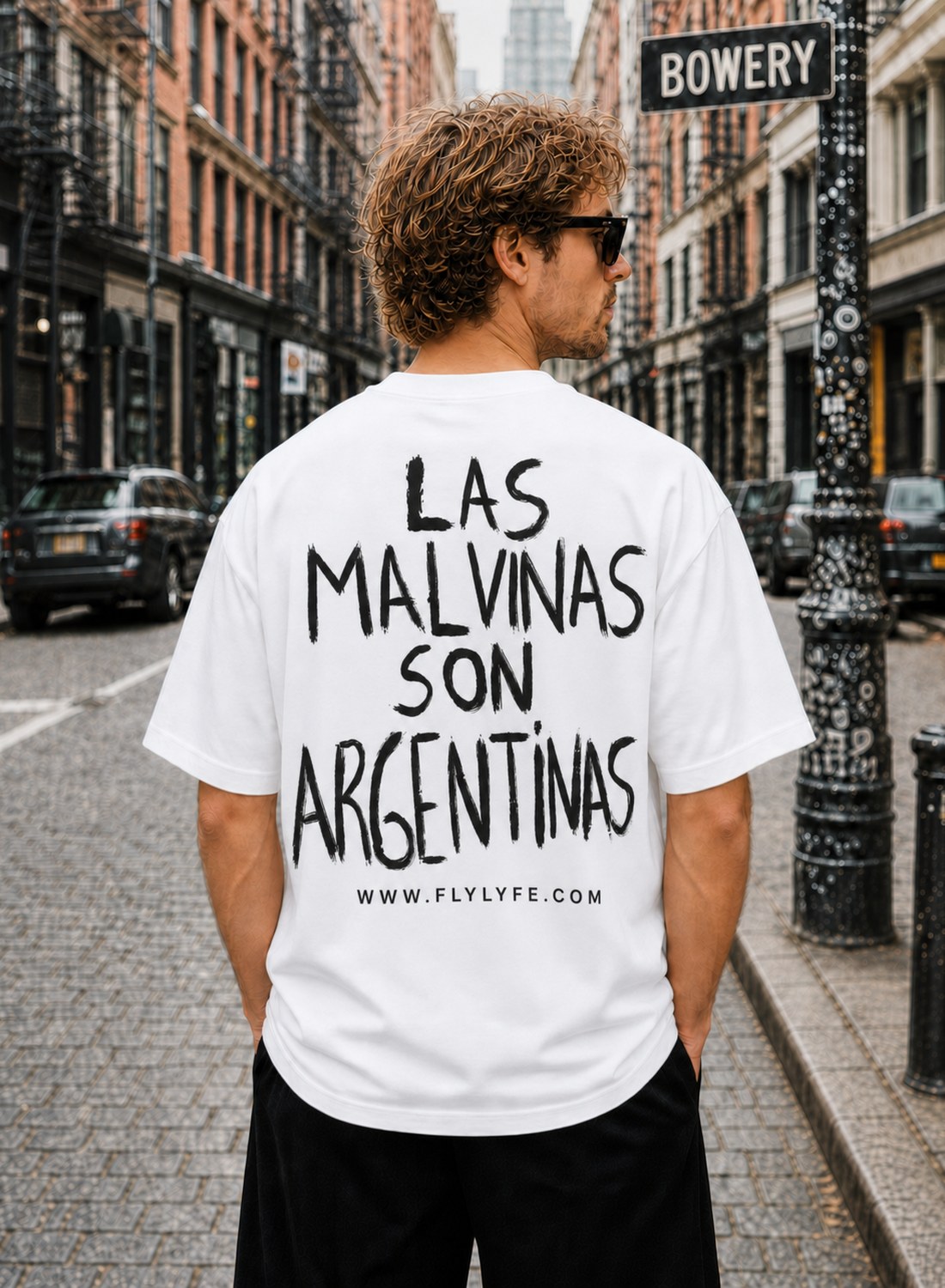
In the semifinal on July 15 in Atlanta, Argentina came from behind to beat England 2–1 — Anthony Gordon scored first, Enzo Fernández equalized in the 85th minute, and Lautaro Martínez headed the winner in stoppage time — while the refereeing was picked apart on social media. Afterward, players held up a Las Malvinas son argentinas banner, the sovereignty slogan you’ll recognize from the hand-painted heritage tee; the full story of the phrase is older than any World Cup.
Then the theory met a fact it cannot digest: Argentina lost the final. Spain won 1–0 at MetLife Stadium on July 19, on Ferran Torres’s extra-time goal, with Enzo Fernández sent off in the 93rd minute for a second yellow — a dismissal ESPN’s refereeing review called clearly deserved. A Nico Williams goal was even disallowed in extra time for a soft foul call that favored Argentina. FIFA has since opened disciplinary cases against Argentina’s federation — over the banner, charged as a demonstration of a non-sporting nature, a post-final scuffle, and fan conduct. Those are conduct cases, not match-fixing findings. A tournament rigged for Argentina forgot the last step.
Why the theory persists anyway
Confirmation bias does the heavy lifting: fans catalogue the calls against their team and forget the ones that go their way — England fans and Argentina fans alleged bias in the same tournament. Fact-checkers found the 2026 discourse supercharged by fabrication: AI-generated photos of referees with players, invented quotes, and tampered Wikipedia pages about match officials. And the symmetry is telling. In 2022, French fans petitioned to replay a final Argentina won. In July 2026, more than 80,000 Argentine fans signed a petition to replay the final they lost. Everyone is sure the referee robbed them. That certainty, not evidence, is what keeps the meme alive.
Frequently asked questions
Is there proof any World Cup match was fixed for Argentina?
No. The 1978 Peru allegations were never proven and are denied by players on both sides. In 2026, IFAB acknowledged one misapplied VAR protocol in the Switzerland quarterfinal — an officiating error, not evidence of a fix — and FIFA’s open cases against Argentina concern conduct, not match manipulation.
Did Argentina win the 2026 World Cup?
No. Argentina beat England 2–1 in the July 15 semifinal, then lost the final 1–0 to Spain after extra time at MetLife Stadium on July 19 — a result that directly undercuts the claim the tournament was rigged in their favor.
What is the Las Malvinas banner controversy?
After the semifinal, Argentine players held a banner reading Las Malvinas son argentinas — Argentina’s sovereignty claim over the Falklands. FIFA opened a disciplinary case, treating it as a non-sporting demonstration. The phrase itself long predates football, which is why it lives on a hand-painted heritage tee as much as on stadium banners.