FLYLYFE JOURNAL · NYC HOUSE MUSIC HISTORY
NYC House Music History: Where Garage House Was Born
House music didn’t just happen — it was built on New York City dancefloors. From invitation-only loft parties to the legendary Paradise Garage, here’s the real story of how NYC shaped garage house, the DJs who defined it, and why that underground sound still moves streetwear culture today.
New to the terms? Our house music glossary explains 70+ of them, from acid house to white labels.
FLYLYFE · UPDATED 2026-07-30
Ask ten people where house music started and most will say Chicago. They’re half right. The genre’s name was coined in a Chicago club — but the culture, the sound-system worship, and the all-night communal dancefloor it grew from were built a few hundred miles east, in downtown Manhattan. New York City is where the DNA of house music was assembled, one loft party at a time. This is the short history of how NYC shaped house music — and specifically garage house, the soulful, vocal-driven sound that still echoes through clubs and closets today.
It started in a loft (1970)
On Valentine’s Day 1970, a 25-year-old named David Mancuso threw an invitation-only party in his home at 647 Broadway. He called it “Love Saves the Day.” There was no bar, no sign, no cover-charge hustle — just a pristine sound system, carefully chosen records, and a crowd that was racially mixed and openly gay at a time when that was rare. Mancuso’s parties, known simply as The Loft, became the template for everything that followed. The DJs who danced there — Larry Levan, Frankie Knuckles, Nicky Siano — would go on to build the clubs that defined dance music.
Paradise Garage and the birth of “garage house”
In 1977, a club opened at 84 King Street in Manhattan. After a long build-out it became the Paradise Garage, and for a decade — until it closed in September 1987 — it was the most important room in dance music. Resident DJ Larry Levan presided over a custom Richard Long sound system and a sprung wooden dancefloor, blending disco, R&B, gospel-tinged vocals and early electronic records into something new. That sound took its name from the club itself: garage house. Soulful, song-driven, and built for bodies in motion, garage is New York’s own strain of house music.
New York vs. Chicago — where did house really begin?
Here’s the part most people get wrong. The word “house” comes from The Warehouse, a Chicago club whose resident DJ was Frankie Knuckles — who was born in the Bronx and learned to spin in New York alongside Larry Levan. Knuckles only took the Chicago job in 1977 after Levan turned it down. Record shops began labeling the sound their customers wanted as “Warehouse music,” soon shortened to “house.” So while Chicago named the genre, its architects were New Yorkers carrying a New York sound. The two cities are less rivals than twin cradles.
Keeping the faith — Shelter and Body & Soul
When the Paradise Garage closed, the scene didn’t die — it moved. In 1991, DJ Timmy Regisford opened Shelter, a club that turned “soulful house” into a genre of its own. Five years later, in 1996, DJs François Kevorkian, Danny Krivit and Joe Claussell launched Body & Soul, a Sunday-afternoon party built in the spirit of Mancuso’s Loft. Both kept the communal, vinyl-driven, deeply soulful NYC tradition alive well into the 2000s — and both still stage reunions around the world.
From the dancefloor to the sidewalk
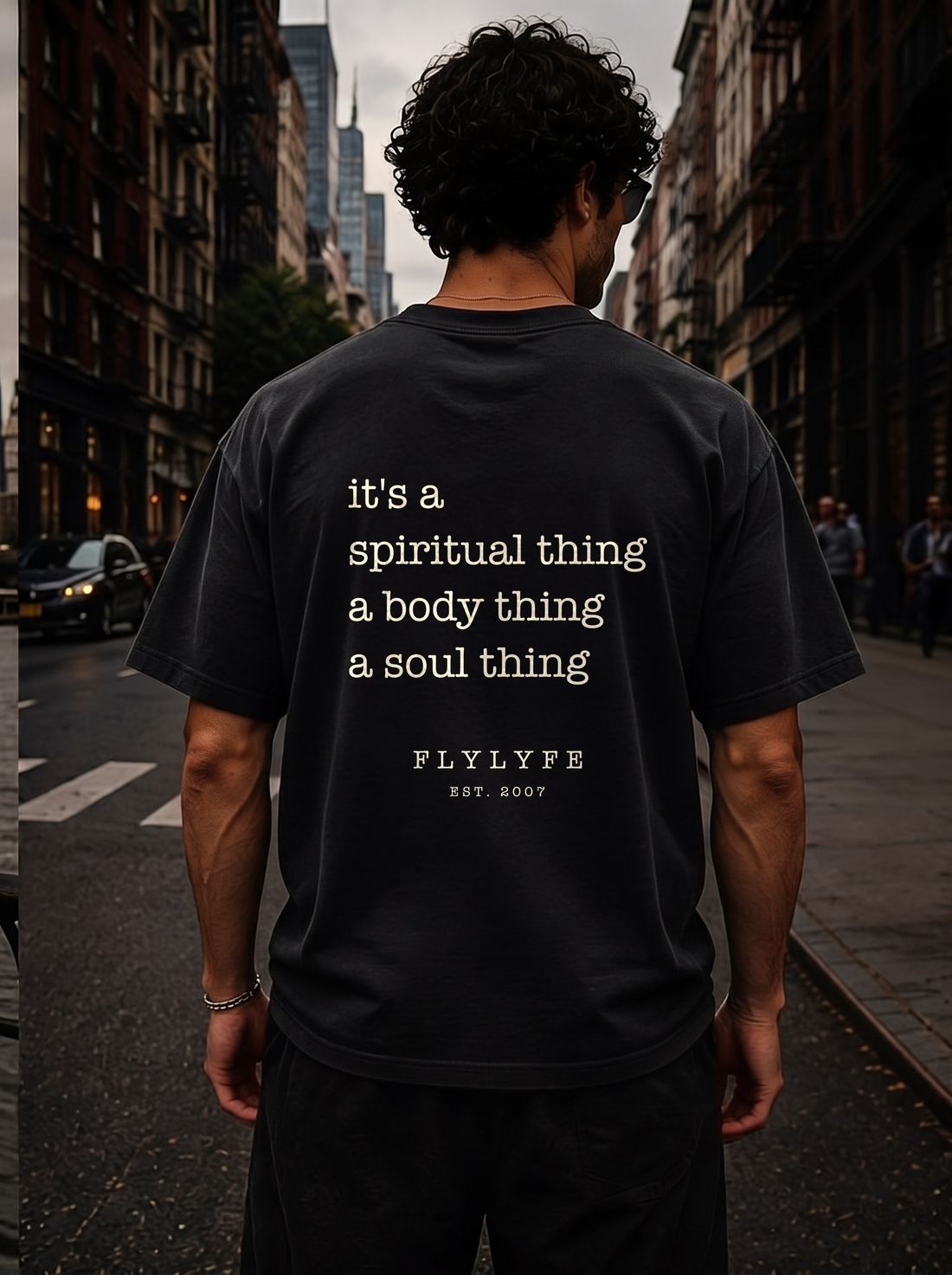
Half a century after Love Saves the Day, that underground energy lives in how people dress as much as how they dance. The oversized graphic tee is streetwear’s loudest canvas, and few subjects carry more meaning than the music born on New York’s floors. That’s the whole idea behind FLYLYFE, making NYC house music streetwear since 2007. Our DJ tees nod to the selectors who built this culture, while our NYC streetwear tees wear the city that raised the sound. Wear the music. Keep it moving.
Frequently asked questions
Did house music start in New York or Chicago?
Both cities share credit. The word “house” comes from Chicago’s Warehouse club, but its resident DJ Frankie Knuckles was a New Yorker, and NYC’s disco-loft scene — The Loft and the Paradise Garage — supplied the culture and the parallel sound known as garage house.
What is garage house music?
Garage house is the New York strain of house music, named after the Paradise Garage. It is more soulful and vocal than Chicago house, leaning on gospel-style singing, piano, and disco-rooted grooves.
What was the Paradise Garage?
A legendary members-only NYC club at 84 King Street (1977–1987) where DJ Larry Levan defined the garage sound on a custom sound system. It is widely considered the most influential club in dance-music history.