FLYLYFE JOURNAL · WHAT IS HOUSE MUSIC
What Is House Music? A Head's Guide to the Sound, the Origins, and the Spirit
House music is electronic dance music built on a four-on-the-floor kick drum, usually 120 to 130 BPM, born in early-1980s Chicago clubs. This guide breaks down its origins, its defining rhythm, its subgenres, and why longtime fans call it a spiritual thing.
New to the terms? Our house music glossary explains 70+ of them, from acid house to white labels.
FLYLYFE · UPDATED 2026-07-07
What Is House Music, Exactly?
House music is electronic dance music built on one unshakable foundation: the four-on-the-floor kick. That means a bass drum landing on every beat of a 4/4 bar, usually somewhere between 120 and 130 BPM. Stack off-beat hi-hats, hand claps, a rolling bassline, and a soulful vocal or piano stab on top, and you have the blueprint that has moved dancefloors for four decades.
It was engineered in the club, for the club: repetitive by design, hypnotic on purpose, made to keep bodies moving until the lights come up. If the sound already lives in you, our House Music tee says it plainly, no explanation required.
The name itself reportedly came out of a Chicago record bin: import shop Importes Etc. labeled the records Knuckles played “As Heard at The Warehouse,” and shoppers shortened the category to simply “house”.
Chicago, the Warehouse, and Frankie Knuckles
Every origin story leads back to Chicago in the early 1980s. Frankie Knuckles, remembered as the Godfather of House, held down the residency at the Warehouse, a Black and queer nightclub where disco refused to die. Knuckles re-edited old records, extended the breaks, and layered drum-machine beats underneath, stretching familiar songs into hours-long journeys.
The genre even takes its name from that room. What started as one DJ keeping a dying dancefloor alive became a global language, and the underground energy of those nights is still the heartbeat of house culture today.
The Warehouse operated at 206 South Jefferson Street from 1977 to 1982, and in June 2023 the City of Chicago officially designated the building a historic landmark. Chicago made the debt official on August 25, 2004, declaring it Frankie Knuckles Day and renaming a stretch of Jefferson Street outside the old club Honorary Frankie Knuckles Way — a tribute helped along by then-Illinois state senator Barack Obama.
From Chicago to New York
House didn't stay in the Midwest. In New York, Larry Levan was building a parallel world at the Paradise Garage, a legendary club that ran from the late 1970s until 1987. His sound, later called garage house or simply New York house, leaned more soulful than Chicago's, full of gospel piano riffs and towering female vocals.
That New York lineage is exactly where FLYLYFE lives: a house-music streetwear brand born in the city, est. 2007, cut for the people who treat the dancefloor as home.
Knuckles was a New Yorker first — born Francis Warren Nicholls Jr. in the Bronx on January 18, 1955, he learned his craft in New York clubs alongside Larry Levan before taking the Chicago residency Levan turned down in 1977.
The Four-on-the-Floor Feel
If you only remember one thing, remember the kick. Four-on-the-floor, one steady quarter-note thud on every beat, is the pulse that separates house from almost everything else. It gives DJs a predictable count to blend two records into one seamless mix, and it gives dancers a groove they can lock into without thinking.
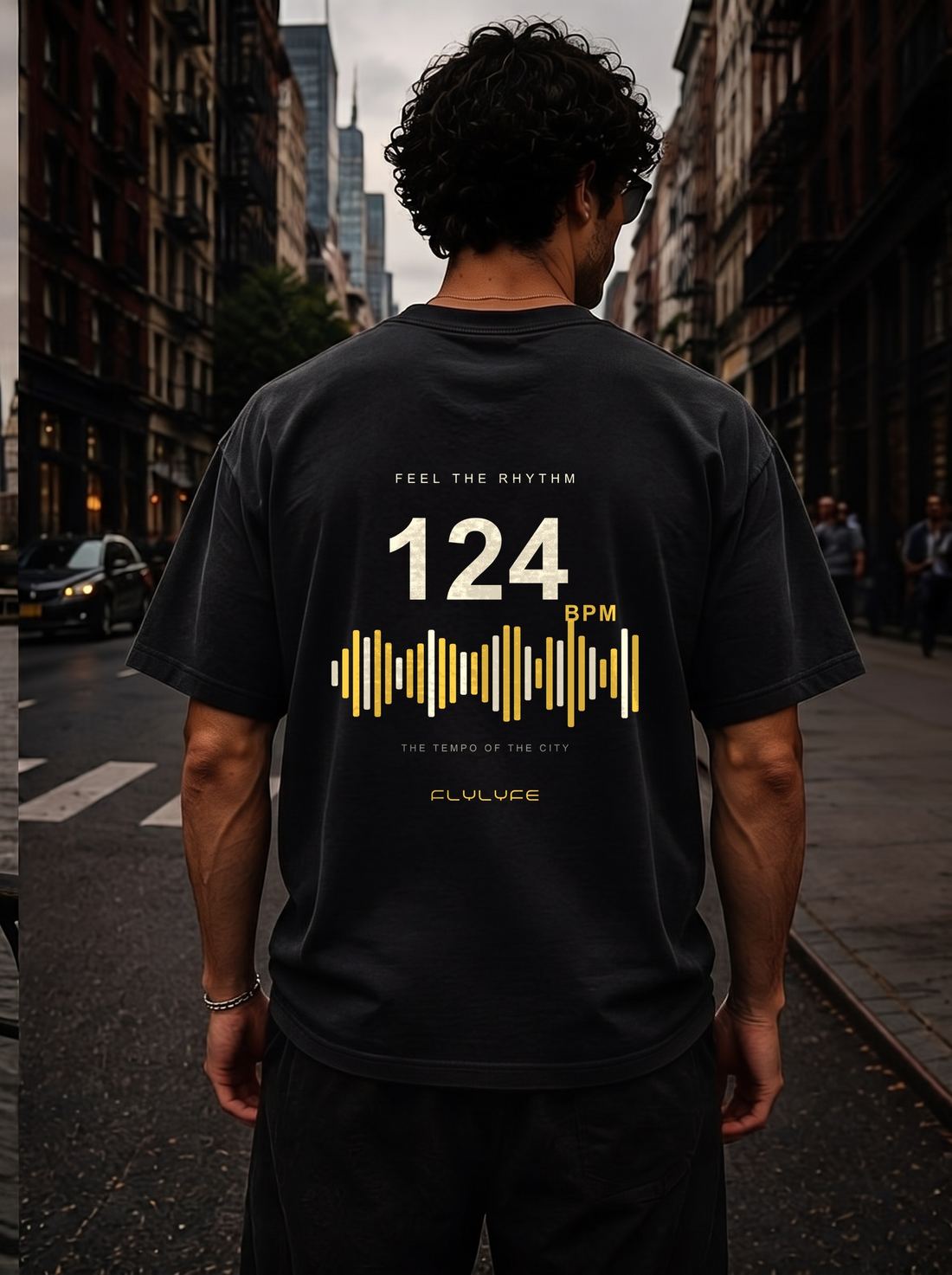
Tempo matters too. Most house sits in that 120-to-130 BPM pocket, fast enough to lift a room but never frantic. Our Tempo tee is named for that count, the number every head feels in their chest long before they can name it.
Deep, Afro, Soulful: The House Family Tree
House is not one sound but a whole family. Deep house slows things slightly, around 115 to 125 BPM, and leans into jazz chords, warm pads, and understated vocals. Afro house folds in polyrhythmic percussion and traditional African drumming. Soulful house keeps the gospel and R&B vocal front and center.
Branch further out and you hit tech house, tropical house, French house, and more, but every one of them shares that same four-on-the-floor spine. Learn to hear the kick, and the whole family tree opens up.
Why Heads Call It a Spiritual Thing
If you are choosing something for a fan, the house music gift guide connects the graphics to different tastes. For your own night out, start with the house music outfit ideas.
Ask a lifelong head what house means and you'll rarely get a technical answer. You'll hear about release, community, communion. Frankie Knuckles himself compared a great club night to church, the moment the whole room becomes one. That's no accident: house grew straight out of disco, soul, and gospel, and it has carried that hands-in-the-air, deeper-love energy from the Warehouse to festival fields worldwide.
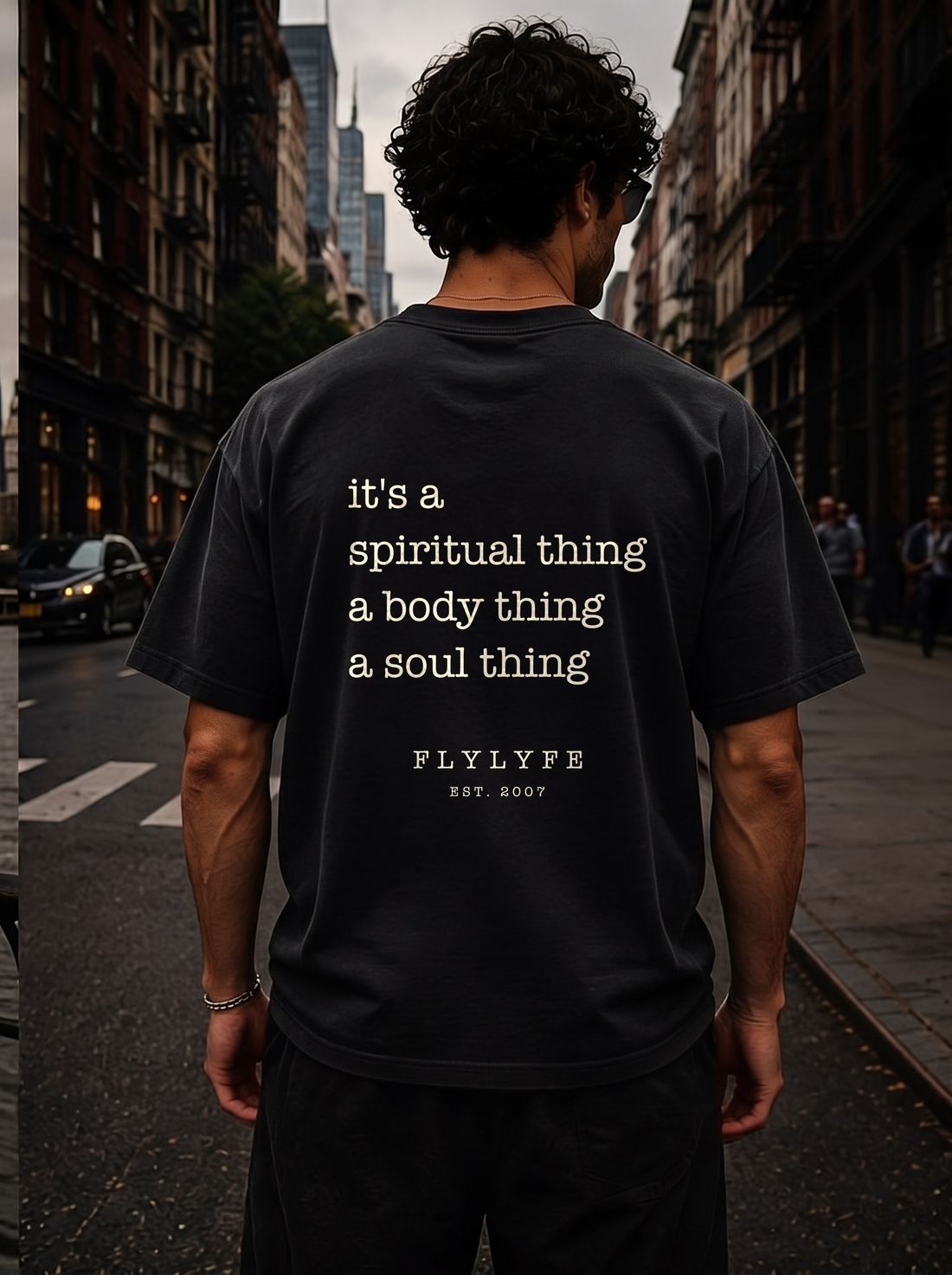
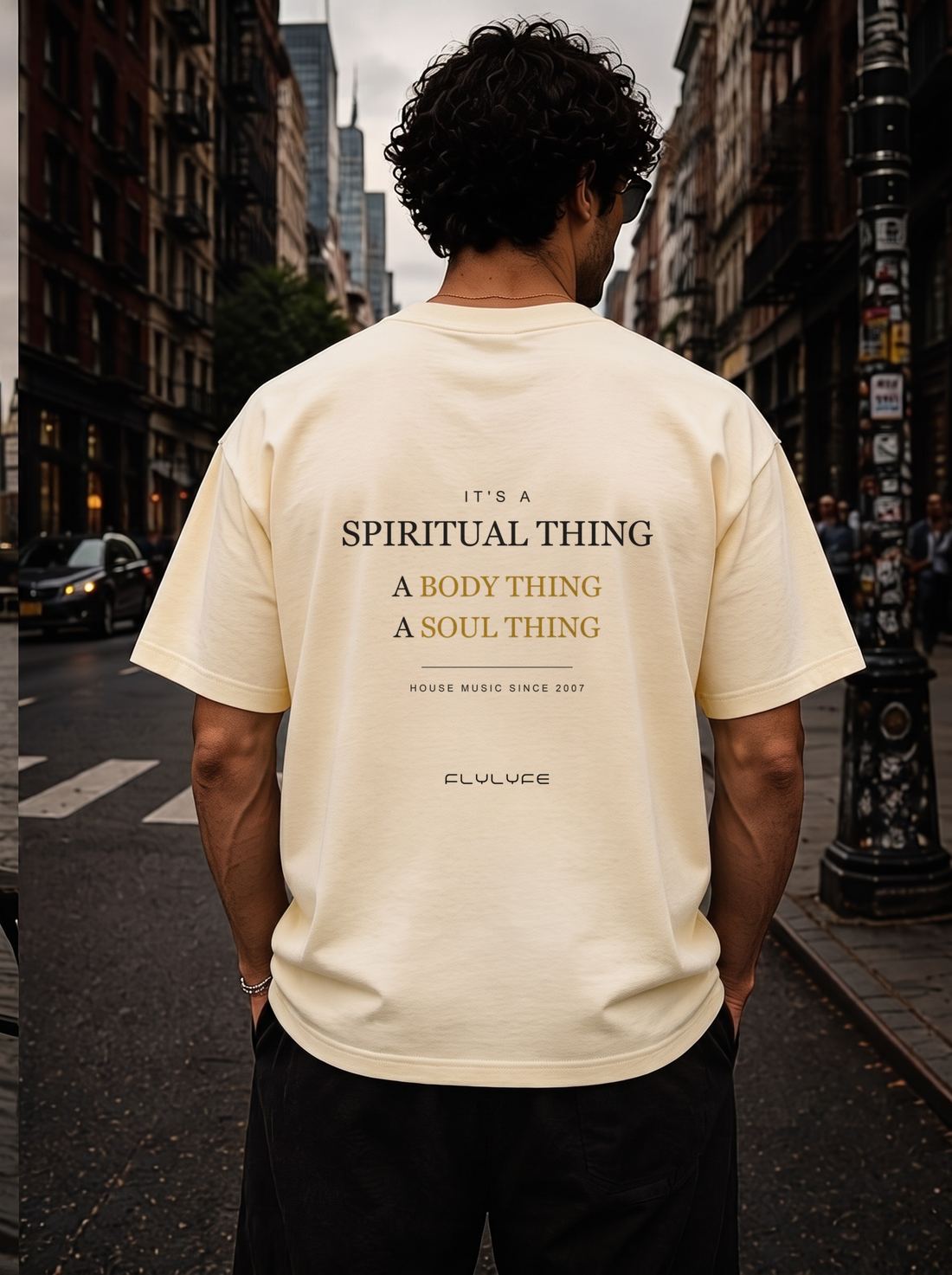
When people say house music is a spiritual thing, they mean it literally, and our Spiritual Thing tee wears that truth like a creed. Like every FLYLYFE piece, it's printed to order in Los Angeles on heavyweight, garment-dyed Comfort Colors cotton for $49.99, built to fade and soften like the records you love most.
The industry eventually caught up: Knuckles won the first-ever Grammy Award for Remixer of the Year, Non-Classical — the inaugural award in the category, presented at the 1998 ceremony for his 1997 remix work.
Frequently asked questions
What does house music mean?
House music refers to a style of electronic dance music defined by a steady four-on-the-floor kick drum, typically at 120 to 130 BPM, layered with off-beat hi-hats, claps, basslines, and soulful vocals. The name traces back to the Warehouse, the early-1980s Chicago club where Frankie Knuckles helped shape the sound.
Where did house music originate?
House music originated in Chicago in the early 1980s, growing out of the city's Black and queer underground club culture and its love of disco. DJ and producer Frankie Knuckles, often called the Godfather of House, is central to its birth. The sound soon spread to New York, where Larry Levan's Paradise Garage shaped a more soulful garage-house style.
What is the difference between house music and techno?
Both are electronic dance genres built on a four-on-the-floor beat, but house is generally warmer and more soulful, drawing on disco, funk, and gospel at roughly 120 to 130 BPM. Techno, which emerged from Detroit, tends to be faster, more mechanical, and more stripped-down, with a colder, futuristic feel.